


CONTACT US
News
Home » Seneca Lake Water Level Condition
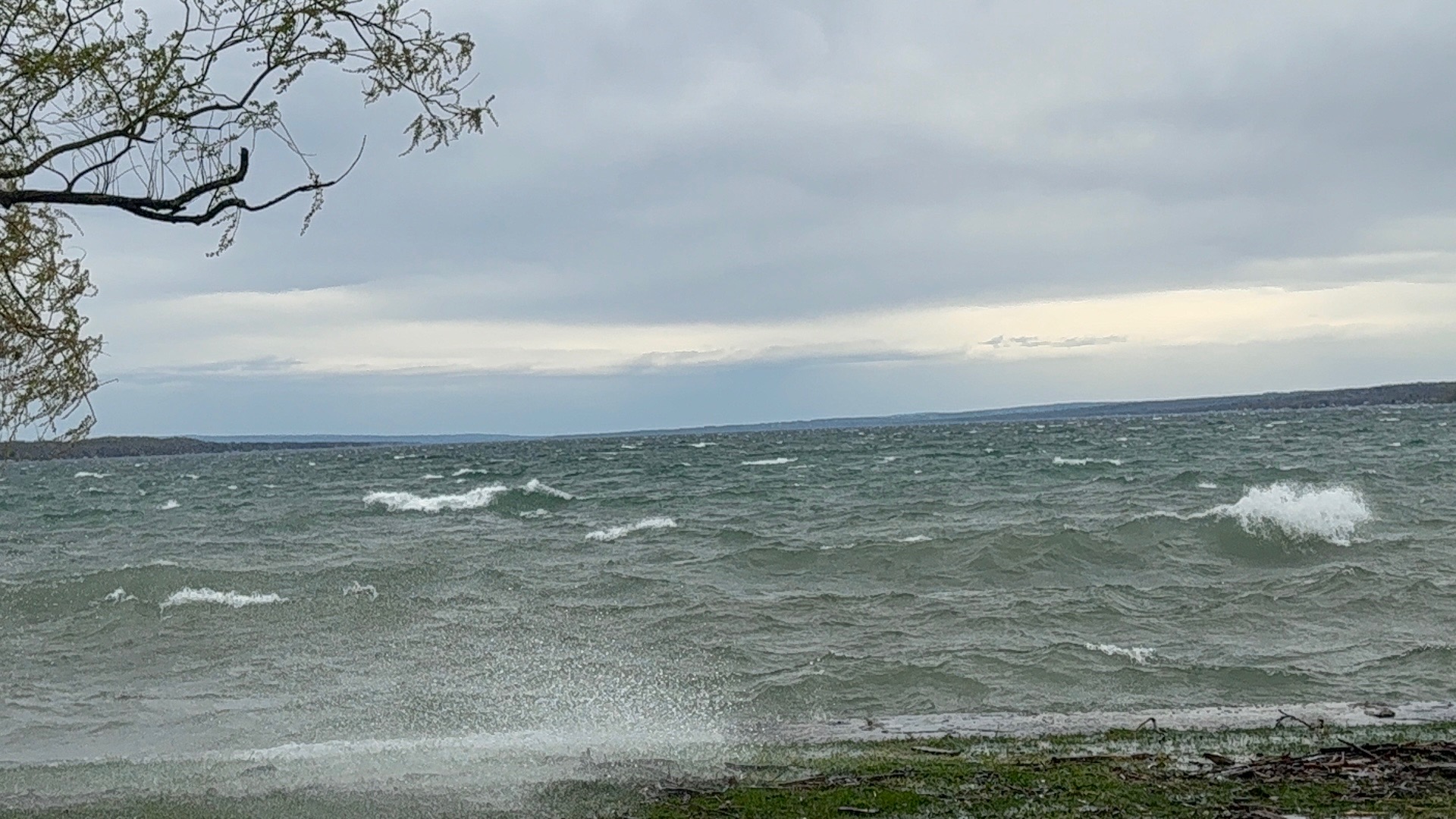
Seneca Lake water levels have risen noticeably following a series of rainfall events over the past two weeks across the watershed. Based on observations from gauges in Geneva and Watkins Glen, the watershed has received on the order of 2 to 3 inches of rain over the past 14 days, with approximately 1.5 to 2.0 inches falling in the most recent 2.5 day period. After remaining relatively steady for several days, the lake level responded with a rapid rise of about 6 to 7” inches on March 30 and March 31, and another 3 to 4 inches from March 31 through today. The lake responses to the earlier rainfall show a typical lag between rainfall and inflow to the lake, but the later impacts show the result of build-up of soil water saturation. Current regional indicators from the NOAA Climate Prediction Center show above-normal soil moisture conditions, meaning that much of the recent rainfall is now running off rather than infiltrating, increasing the sensitivity of lake level to rainfall.
In addition to direct rainfall and runoff, lake levels are influenced by major tributary inflows and managed outflows. Although the Seneca Falls gates are releasing a relatively high amount of water (1900 cubic feet per sec, cfps), inlet flows from Keuka Lake (1200 cfps) and Catherine Creek (210 cfps). Unknown amounts from the various creeks feeding into the lake are also high, but SLPWA field results indicate some tapering of these. At the north end, outflows through the Seneca River system near Seneca Falls are regulated and can vary depending on downstream conditions. So far there is more downstream capacity for water than we experienced last May and June, but Cayuga Lake is only a few inches away from the “Minor Damage” lake level and NOAA is warning of flooding.
Moving forward from here, we’re expecting around 1 inch of rain spread through the next three days, with the most coming on Sunday morning, about 0.6”. This could result in up to a 6 inch rise in lake level. If so, this will bring “Minor Flood Damage” on the lake, similar to the highest level in recent years. The wind can come into play with wind speeds of about 15 mph from the South on Friday, tapering off on Saturday, but picking up to the teens again Saturday evening and Sunday, generally coming from the South and West. Docks that are susceptible to high water ought to be protected with water barrels, for example.
Links to more information about lake levels:
National Water Prediction Service
If you have seen or experienced flood damage, please document it using MyCoast to spread awareness and keep others on the lake safe!
MyCoast NY is a public web tool where you can contribute and access photos of flooding, shoreline change, and storm damage from anywhere in the state. When you submit a photo, it is automatically linked to real-time weather, river, and tidal gauge data to help provide context for the photo. The tool also creates reports that help stakeholders such as government agencies, business owners, and residents understand our changing environment and make informed decisions. Photos can be submitted through the app iPhone / Android or the MyCoast NY website.
MyCoast NY is a project of New York Sea Grant and New York State Water Resources Institute at Cornell University.
MyCoast tools include:
To learn more about volunteering: https://senecalake.org/volunteer-opportunities/
To learn more about donating: https://senecalake.org/giving/
Seneca Lake Pure Waters Association is a 501(c)3 organization committed to preserving, protecting, and promoting the abundant resources of the largest Finger Lake. Seneca Lake is a source of drinking water, recreation, and economic opportunity for the greater community and its visitors. Our programs and partnerships make it possible to monitor water quality, educate the public, and evaluate threats to ensure the a healthy future for Seneca Lake and those who depend on it.

CONTACT US
Seneca Lake Pure Waters Association
P.O. Box 247
Geneva, NY 14456
QUICK LINKS
SUBSCRIBE TO OUR NEWSLETTER