


Protecting Seneca Lake From Invasive Species
Invasive species can threaten Seneca Lake and the surrounding watershed, impacting native ecosystems, recreation, forests, and local communities. Prevention, early detection, and ongoing management are key to limiting their impact.
Monitoring, Prevention & Action
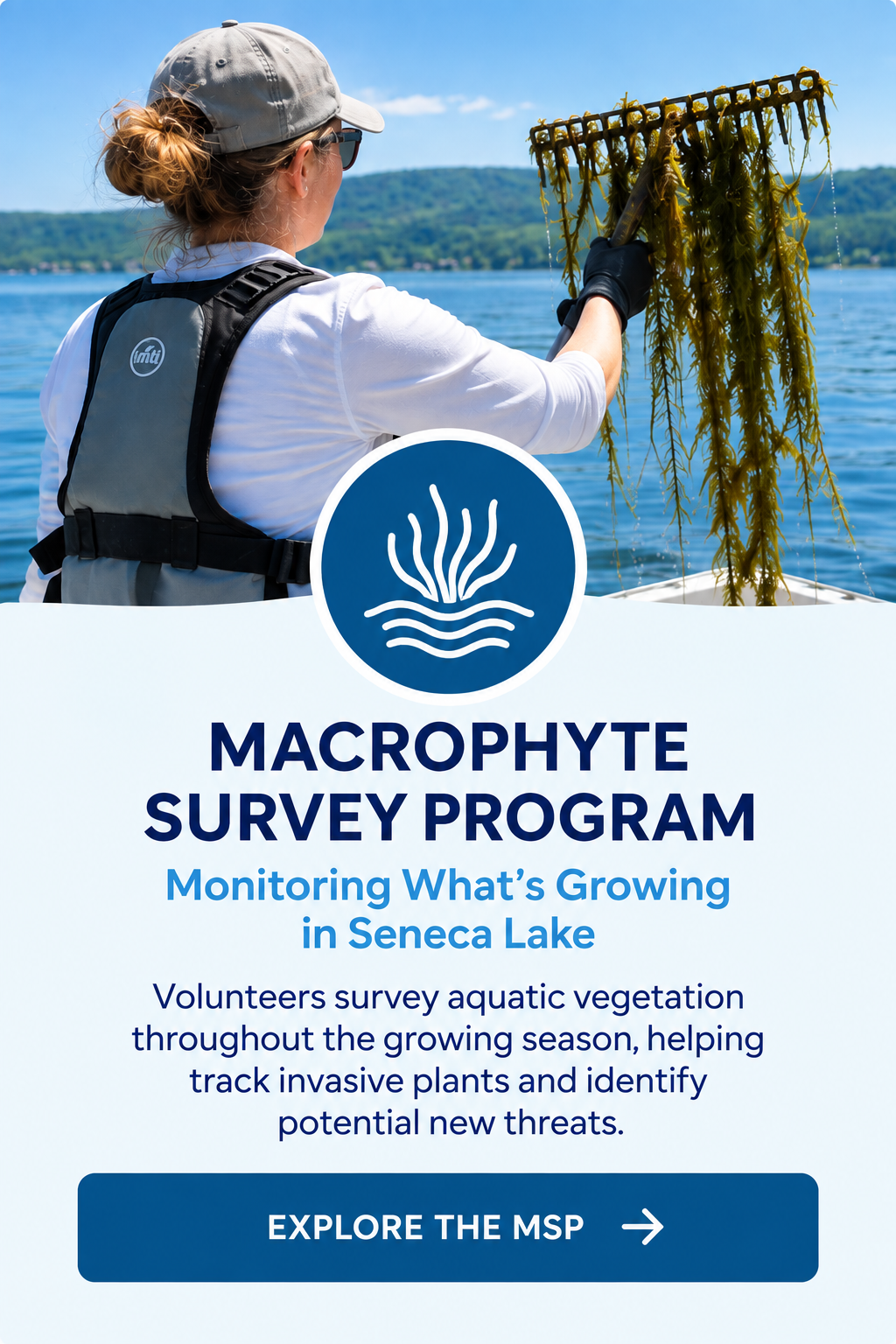
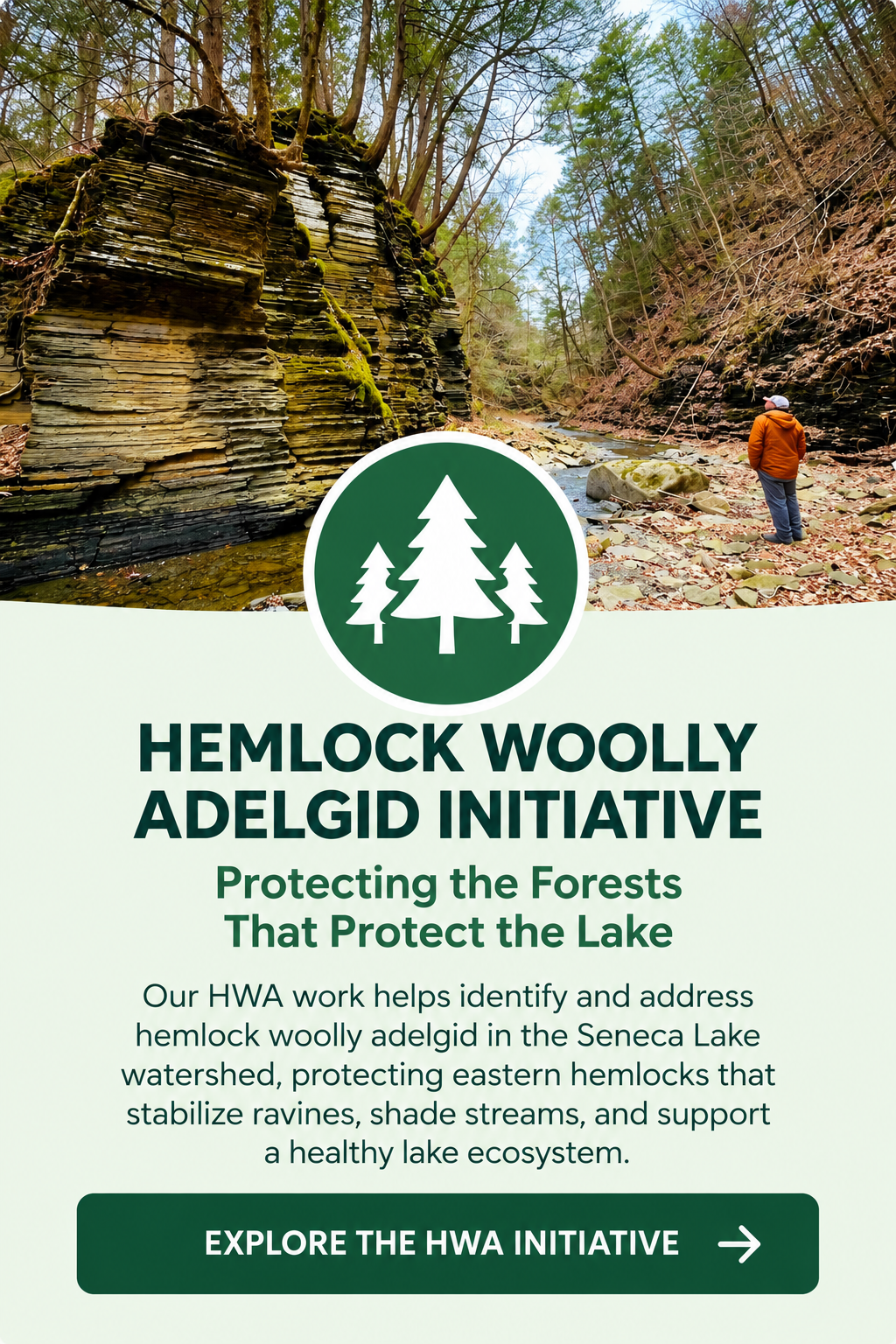
Pure Waters takes a hands-on approach to protecting Seneca Lake through aquatic plant monitoring, boater education, and hemlock protection. Explore the programs helping us identify threats, prevent their spread, and protect the watershed.

What’s Here & What’s on Our Radar
Some invasive species are already established in Seneca Lake, while others are close enough to pose a potential threat. Knowing the difference helps us focus on both management and prevention.
ALREADY IN SENECA LAKE
Established Aquatic Invasive Species
Seneca Lake is already home to a number of aquatic invasive plants and animals. Once established, invasive species can be extremely difficult to eliminate, making monitoring and management important.
Plants
Eurasian Watermilfoil
Curlyleaf Pondweed
Water Chestnut
Starry Stonewort
Brittle Naiad
Animals
Green Sunfish
Banded Mysterysnail
Euryhaline Amphipod
Mud Bithynia
Fishhook Waterflea
Alewife
Common Carp
Asian Clam
Rudd
Sea Lamprey
Zebra Mussel
Quagga Mussel
Round Goby
Bloody-red Shrimp
ON OUR WATCHLIST
Hydrilla
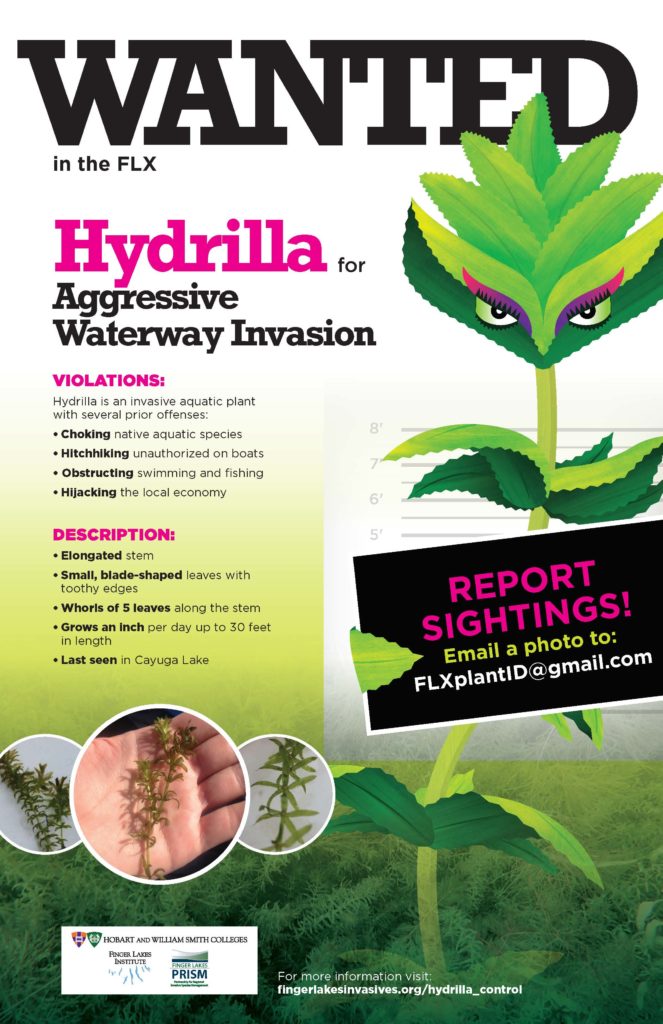
Hydrilla is one of the most aggressive aquatic invasive plants in the United States. While it has not been detected in Seneca Lake, its presence in nearby waters makes prevention and early detection especially important.
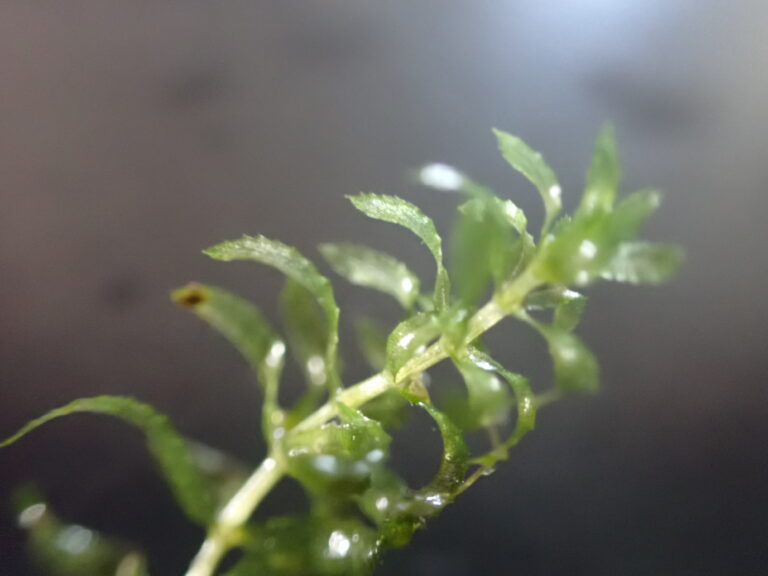
Hydrilla grows almost completely underwater and can look similar to native aquatic plants such as Elodea. Look for:
- Long, branching underwater stems
- Small, pointed leaves arranged in whorls, usually five per stem
- Serrated or saw-toothed leaf edges
- Small spines along the underside of the leaves
- Dense growth that can reach the water’s surface
Think you found Hydrilla? Take clear photos, note the location, and report the suspected plant.
Hydrilla can spread rapidly and form dense underwater beds and mats that crowd out native plants, alter aquatic habitat, and interfere with boating, fishing, and swimming.
Even small plant fragments can establish new populations and can be transported between lakes on boats and equipment. Hydrilla is already being managed in nearby Cayuga Lake, making prevention and early detection especially important for Seneca Lake.
Hydrilla has not been detected in Seneca Lake.
Invasive Species Don’t Stop at the Shoreline
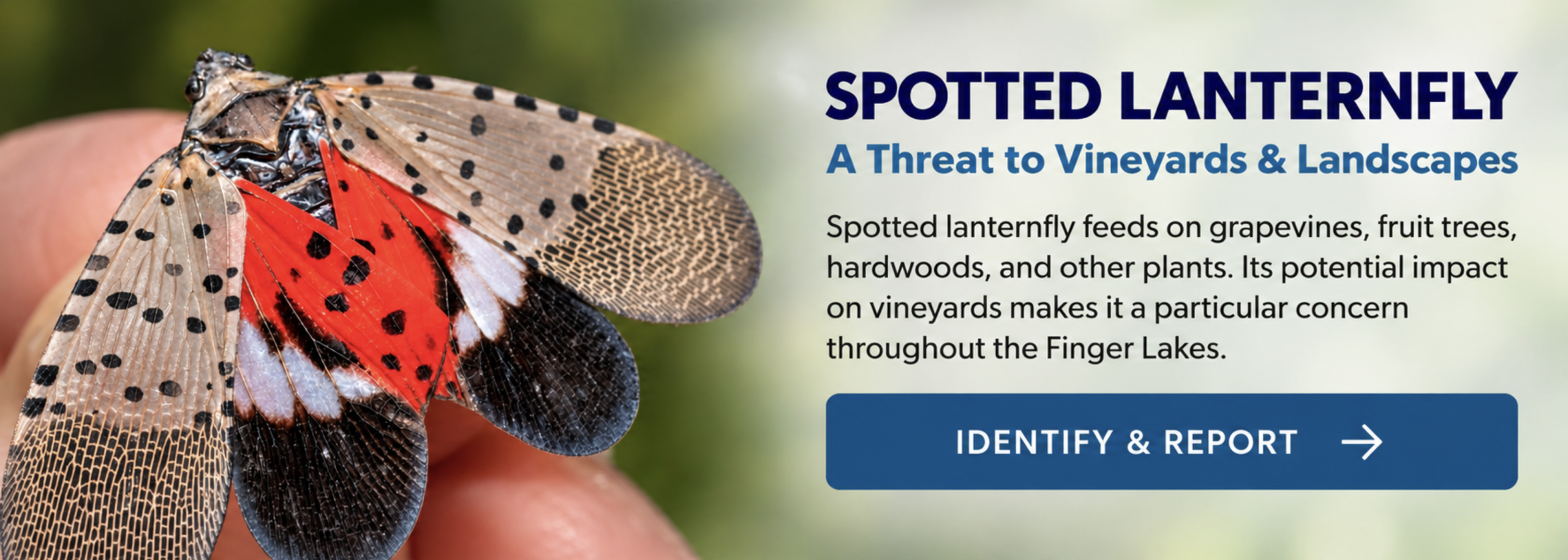
Invasive species also threaten the forests, vineyards, and landscapes surrounding Seneca Lake. Knowing what to look for can help protect the entire watershed.
Help Stop the Spread: Clean, Drain, Dry
Think You Found an Invasive Species?
Early detection can make a big difference. If you see a plant, animal, or insect you believe may be invasive, take clear photos, note the location, and avoid moving the organism. Send to info@senecalake.org.