


CONTACT US
News
Home » Looking Back: The 2018 Seneca Lake Flood
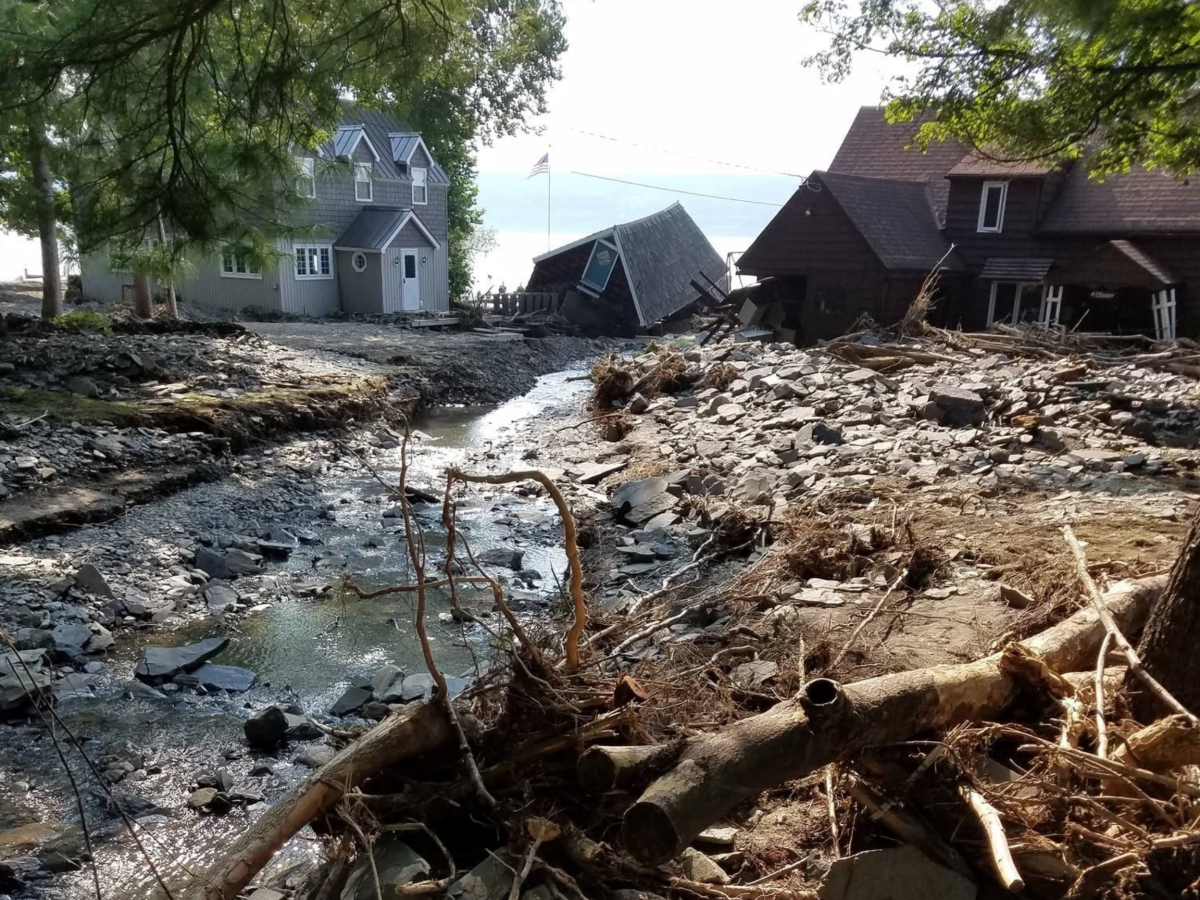
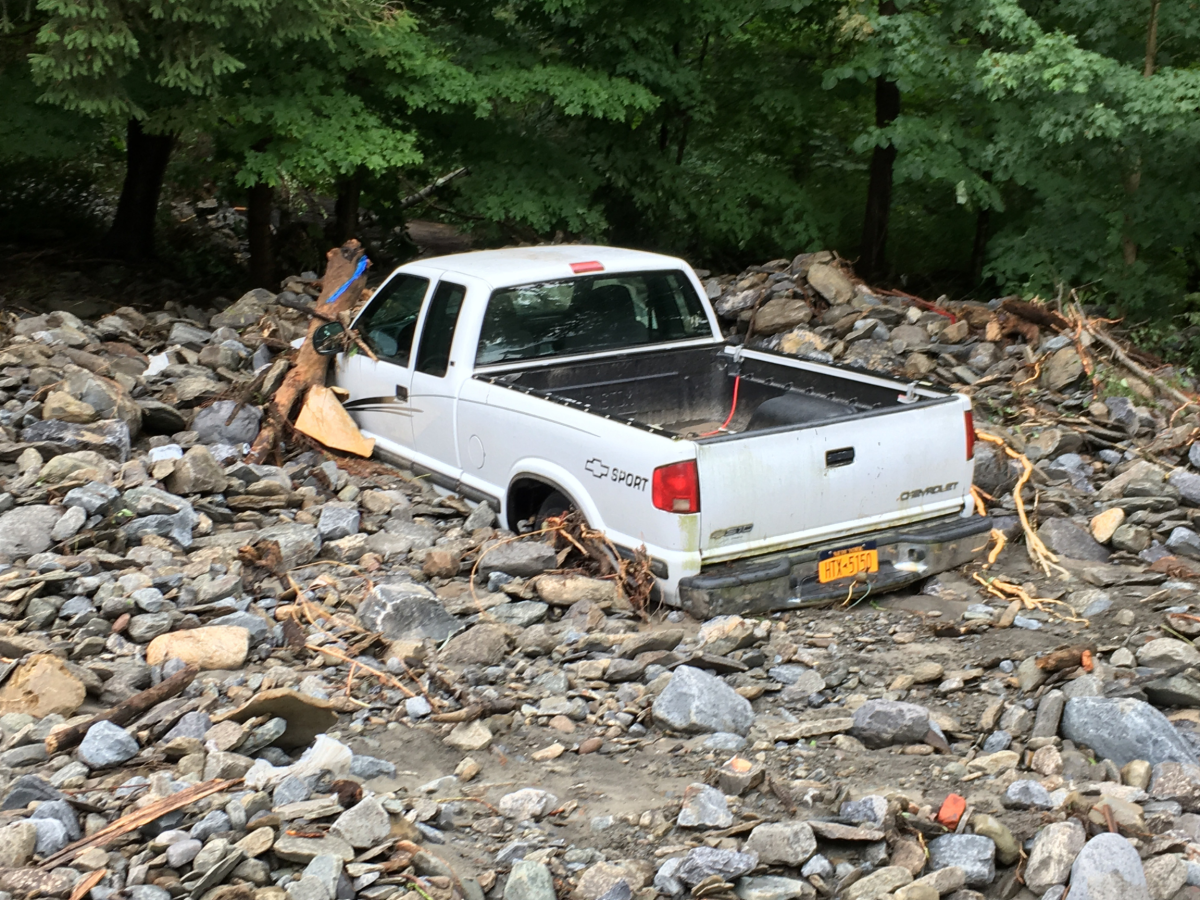
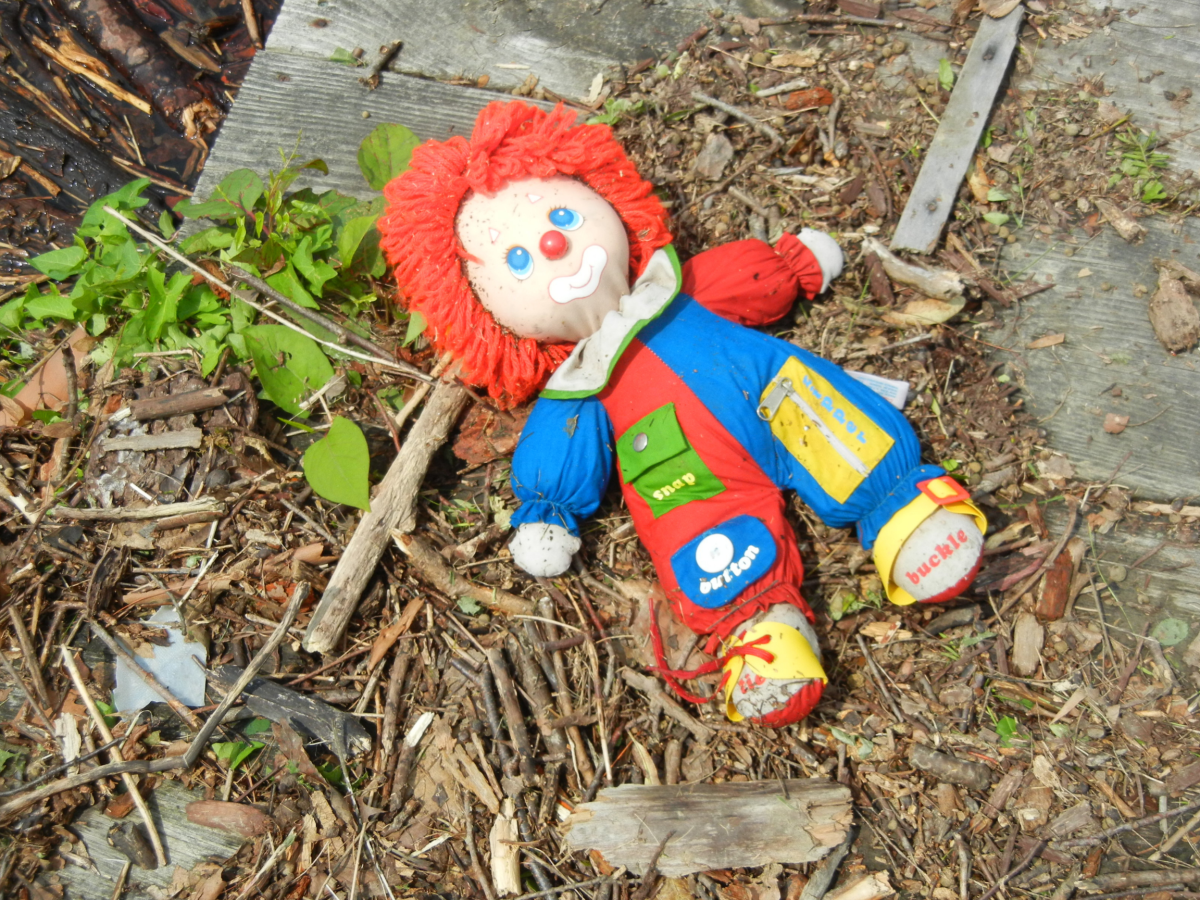
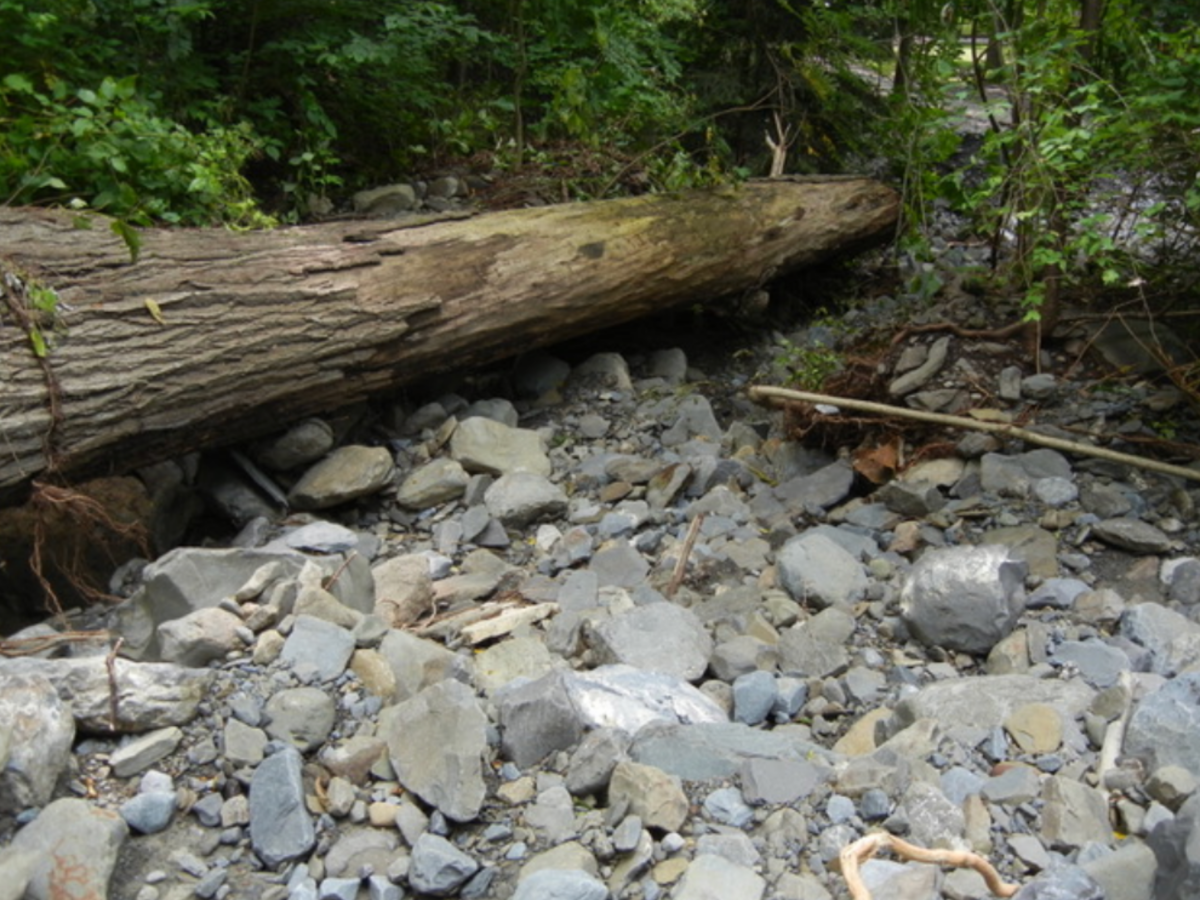
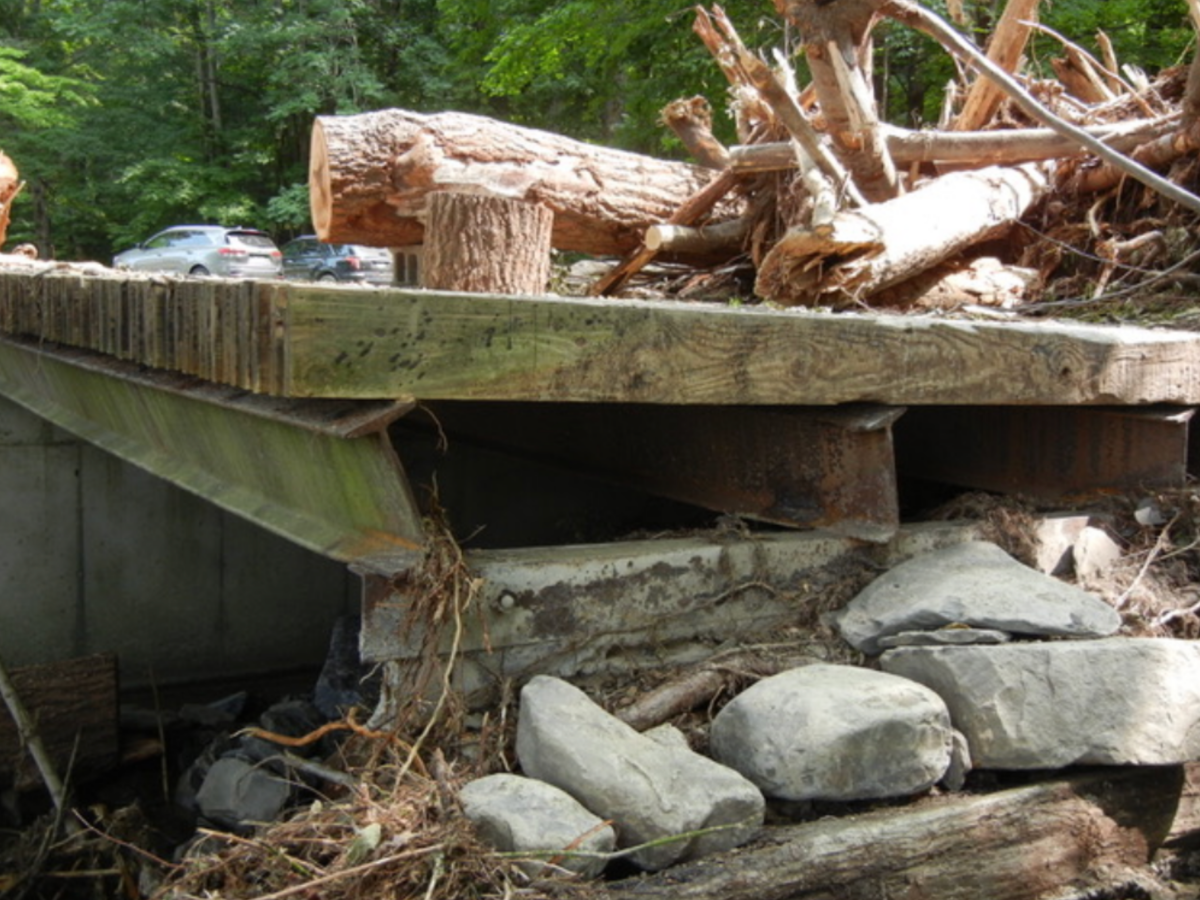
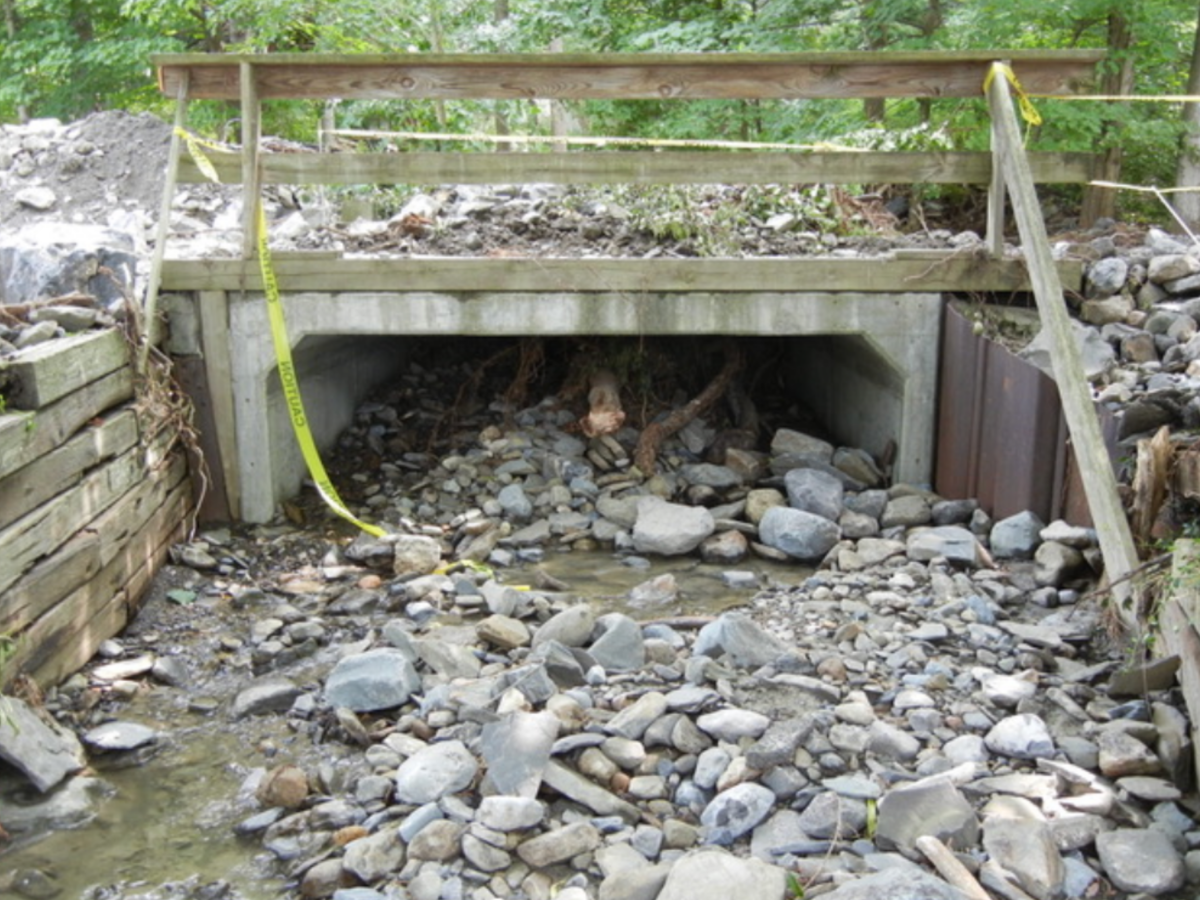
GENEVA, N.Y. – Eight years can feel like a long time. And then you come across a photograph from August 2018, and suddenly it doesn’t feel all that long ago. For those who lived through the flooding around Seneca Lake that summer, these images may bring back memories they’d rather leave in the past. For those who weren’t here, the photos help tell the story.
On August 14, 2018, the rain came down hard and fast, centered over the southeastern part of the watershed. Some areas received up to 9 inches in a matter of hours, while local measurements in Hector reported around 11.5 inches. And all of that water had to go somewhere. Creeks overflowed. Roads washed out. Homes flooded. Trees, mud and debris came rushing downhill toward Seneca Lake. Lodi and Lodi Point were among the communities hit hardest.
It’s hard not to look back at that summer and think about where we are today. In 2018, there was far too much water coming into the lake in far too little time. Today, we’re dealing with almost the opposite. After a dry summer, lake levels continue to fall, with the ongoing leak at the Seneca Falls dam adding to the decline. The circumstances couldn’t be more different. But the contrast is striking.
Reports from those first few days give a sense of just how serious things became. According to the New York State Department of Transportation, state swift-water rescue teams assisted 77 people with evacuations and checked 89 structures for anyone who might need help. News reports from WXXI described destroyed roads and widespread flooding, while Spectrum News reported vehicles and even a camper swept into Seneca Lake and residents evacuated from Lodi Point. More than 60 people there reportedly watched as cars and portions of homes were washed away. The National Guard was mobilized. State and local agencies, emergency responders and highway crews came in to help.
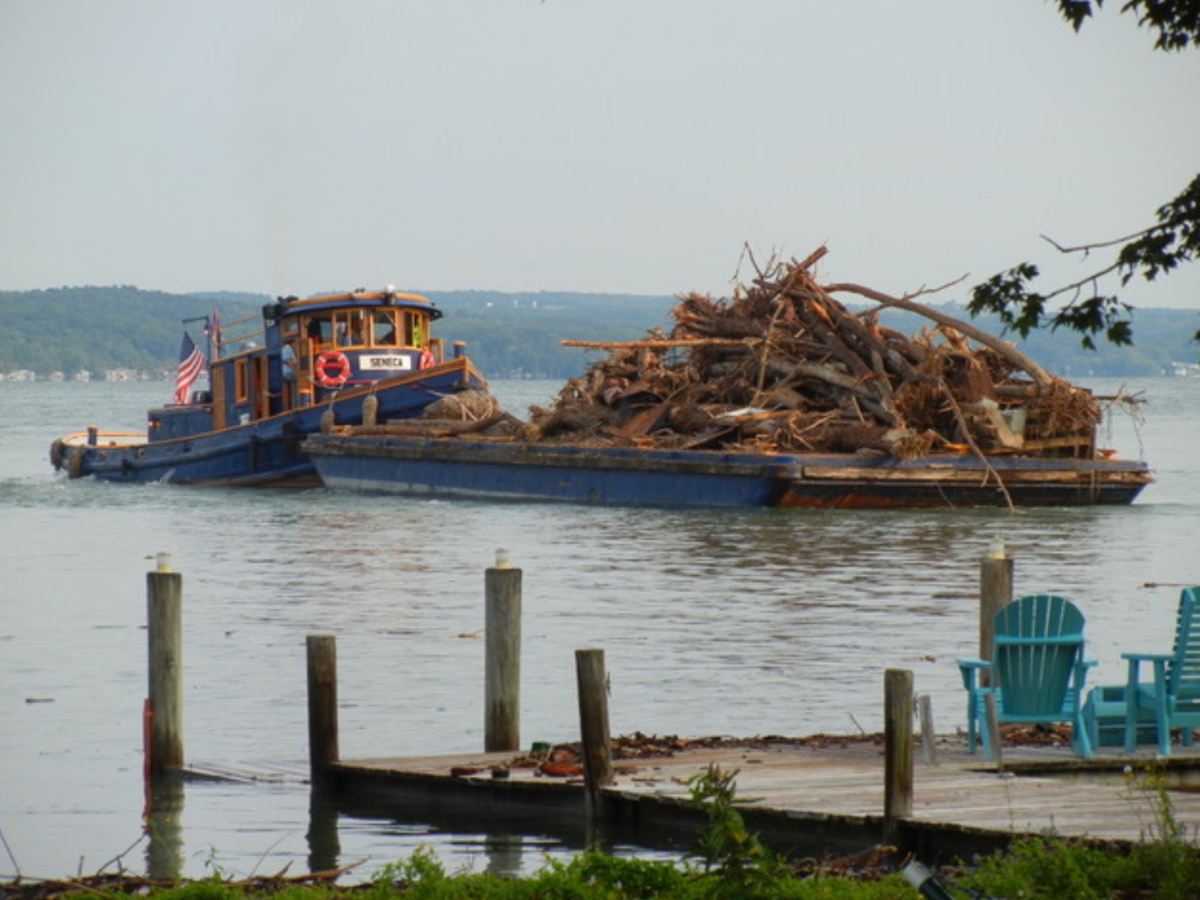
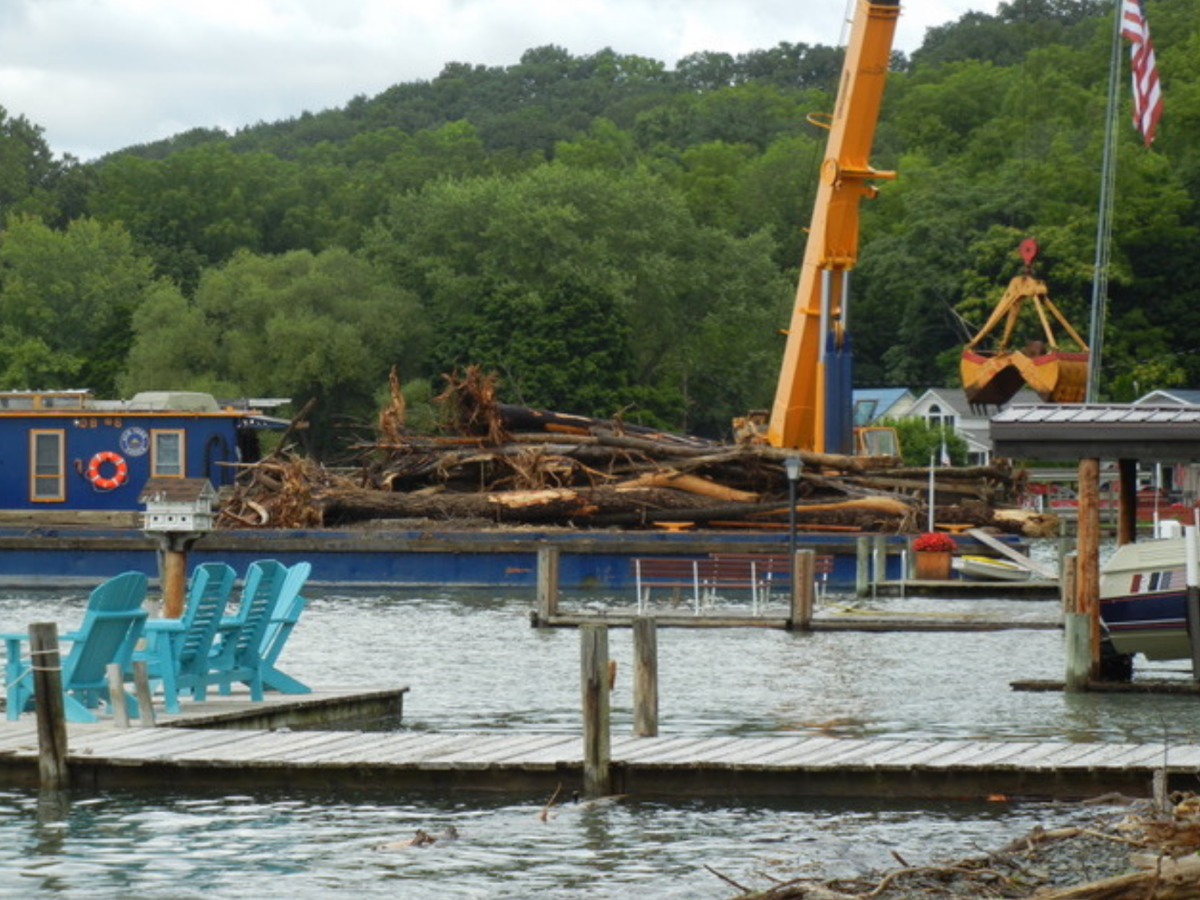
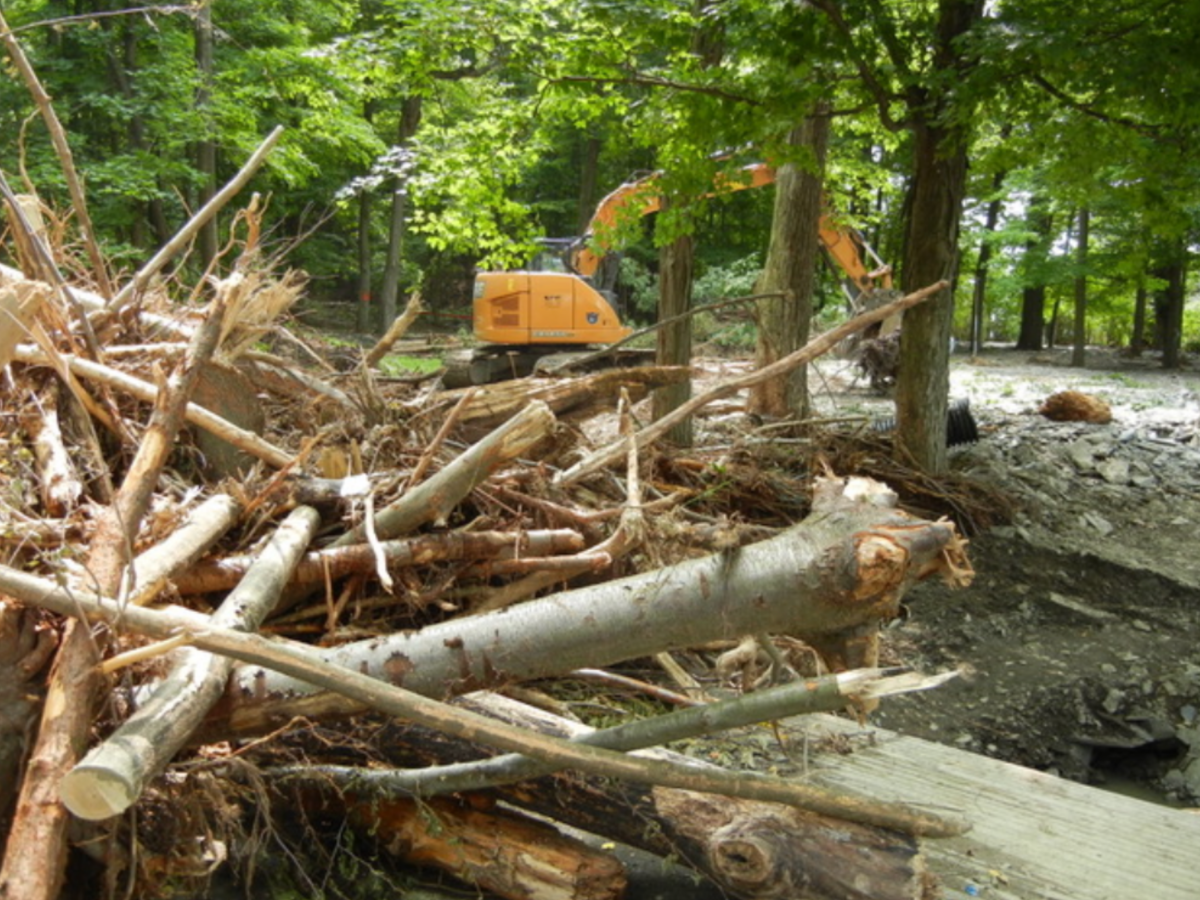
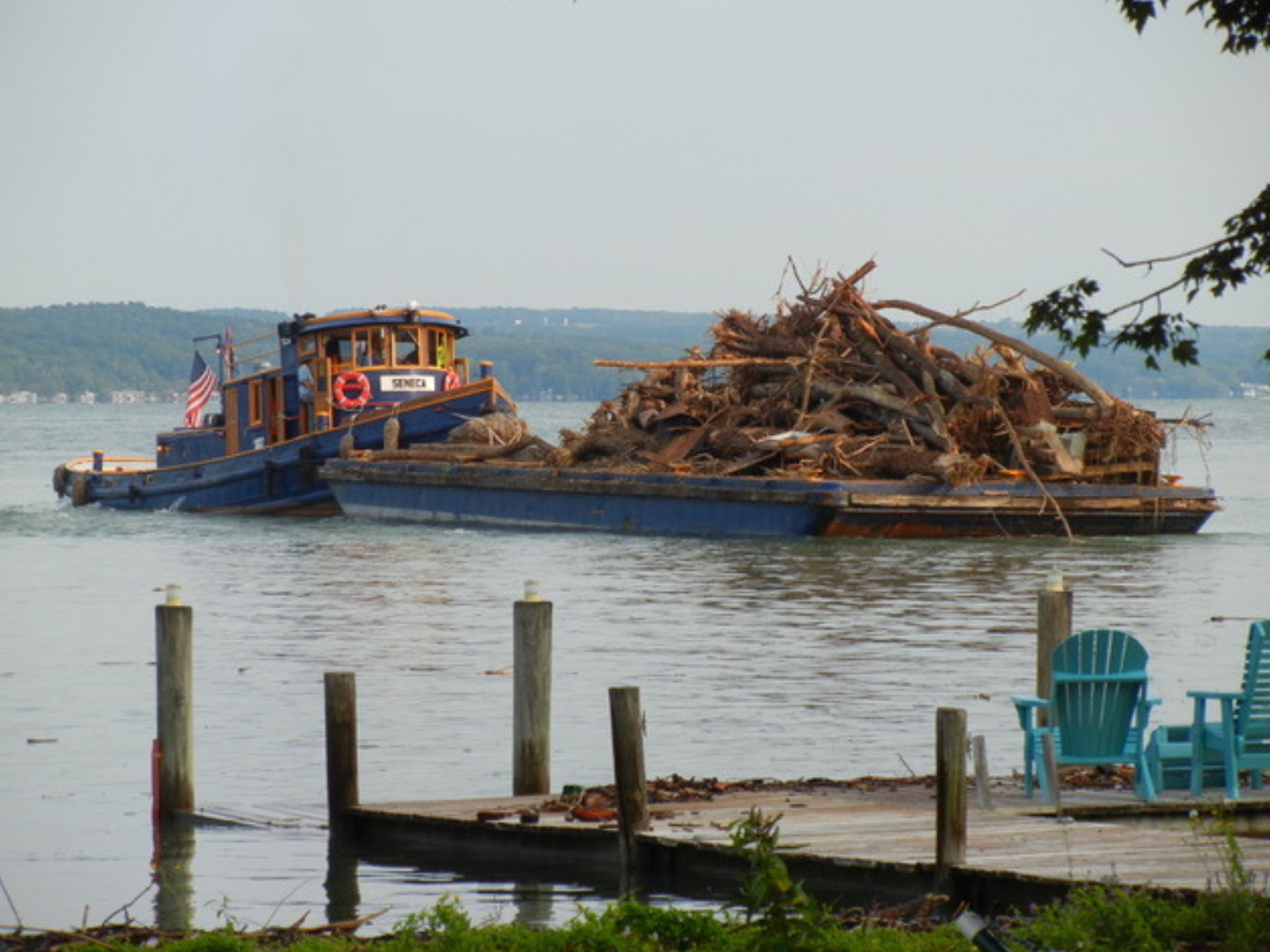
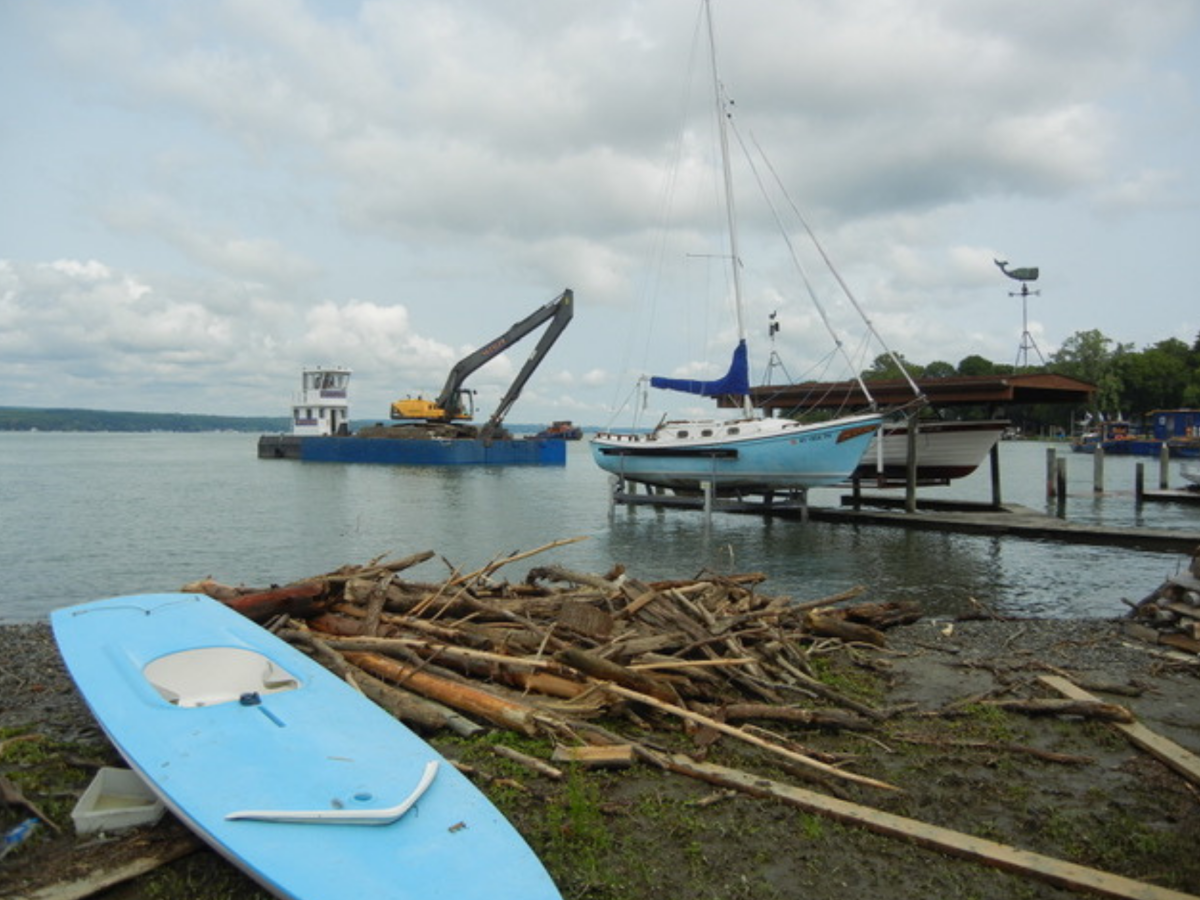
When the rain stopped, the work was just beginning. A week later, Spectrum News reported that aerial images showed a debris field stretching as much as five miles across Seneca Lake. Trees, pieces of structures and other debris had made their way into the water. Marine units and tugboats worked on the lake while cleanup continued on land and along the shoreline.
Pure Waters Treasurer Charlie Fausold was there during the flood and its aftermath. He remembers the relief of seeing equipment arrive to help with the cleanup. As Charlie put it, “Eight years ago we were very glad to see the NYS Canal Corporation and Sessler Brothers show up.” Looking through the photos, it’s easy to see why.
It’s quite a contrast to Seneca Lake today. In 2018, communities were recovering from an incredible amount of water. Now, we’re watching the lake get lower and lower. Different problems. Different circumstances. But there is a common thread: our ability to control how much water enters and leaves Seneca Lake is limited, which makes building resiliency to lake level fluctuations all the more important.
For lakeshore property owners, that might mean raising a dock, moving a boat lift to deeper water or, if needed, looking at the depth of a well. Native plants along the shoreline can also provide an erosion-resistant alternative to a breakwall. Those who live near creeks can help keep streambeds clear, while reducing impervious surfaces like driveways and parking lots can help manage runoff. Farther upstream, county Soil and Water Conservation District projects, including retention basins, can help hold back water, while agricultural practices such as field tile can help manage water on farmland. Any projects that require permits should, of course, follow the appropriate requirements.
Climate change, changing land-use patterns and other factors will continue to contribute to short- and long-term lake level fluctuations. If the flooding of August 2018 and today’s low lake levels tell us anything, it’s that Seneca Lake can look very different from one year to the next. We may not be able to control every fluctuation, but we can be better prepared to adapt to them.
Sources & Additional Reading: Governor Cuomo Directs Recovery Teams to Finger Lakes and Southern Tier Regions After Heavy Rain and Flash Flooding — New York State Department of Transportation, Lodi Hit Hard by Rain and Flash Floods — WXXI News, Cleanup Continues After Heavy Rains Soak the Region — WXXI News, Lakeside Town of Lodi Cleaning Up From Torrential Flooding — Spectrum News, Seneca Lake Thick With Debris Week After Flash Floods, Heavy Rain — Spectrum News
To learn more about becoming a member: https://senecalake.org/join/
To learn more about donating: https://senecalake.org/giving/
Seneca Lake Pure Waters Association is a 501(c)3 organization committed to preserving, protecting, and promoting the abundant resources of the largest Finger Lake. Seneca Lake is a source of drinking water, recreation, and economic opportunity for the greater community and its visitors. Our programs and partnerships make it possible to monitor water quality, educate the public, and evaluate threats to ensure the a healthy future for Seneca Lake and those who depend on it.

CONTACT US
Seneca Lake Pure Waters Association
P.O. Box 247
Geneva, NY 14456
QUICK LINKS
SUBSCRIBE TO OUR NEWSLETTER